
The conditionality mechanism tested in Hungary
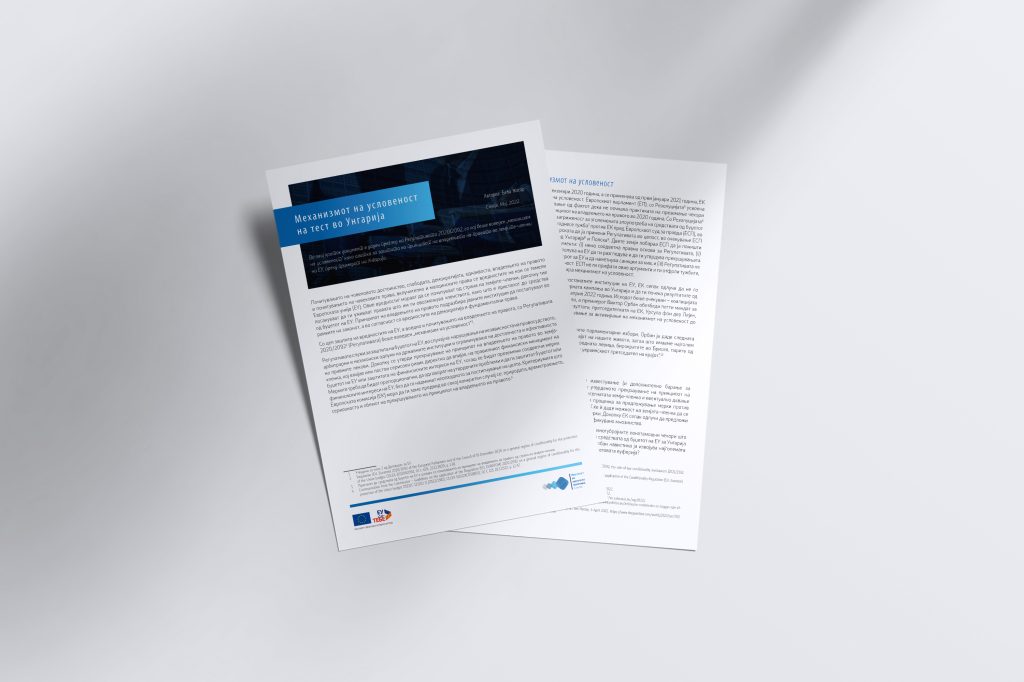 This brief provides an insight of Regulation 2020/2092, which introduced “the conditionality mechanism” as a tool for protection of the rule of law principle in EU Member States, through Hungary’s example. DOWNLOAD PDF
Second group of current and future mediation trainers got methods and skilss training from Dutch experts

A new group of current and future mediation trainers, as well as licenced mediators, got methods and skills training from Dutch experts last week. This second skills and techniques training for mediation was organized by experienced experts and mediators, Gea van Klompenburg and Marjon Kuipers from the International mediation register and the Dutch Federation of mediators. […]
Discussion: Mediation is more than just courts and lawyers, it is a culture developing quickly in this country

Mediation is more than just courts and lawyers, it is a culture. The public should accept it, because it is imperative for mediation to spread further than the legal aspect. This was one of the main conclusions from the promotional event “Improving the quality of mediation” organized by EPI, as part of the project […]
Initial findings of the new PAR monitoring cycle presented at the seventh meeting of the National Working Group

The key points of the policy briefs “Publishing Information on the Public Service in North Macedonia: Why is Transparency and Accountability Important?” And “Public Engagement in Developing Key Strategic Public Administration Reform (PAR) Documents” were presented at the seventh meeting of the National Working Group (NWG) for public administration reform in the Republic of North […]
Quarterly brief: Rule of Law in View of EU Accession – January-March 2022
 This brief summarises the key developments in relation to rule of law in view of EU accession in North Macedonia for the period January – March 2022. It includes the monitoring of the fundamentals of EU accession, including key developments in the functioning of democratic institutions, public administration reform and chapter 23: Judiciary and Fundamental [...]
From responsibility to accountability: Corporate social responsibility disclosure as a mean for engaged private sector
Info: Companies are expected and pressured to justify their decisions and actions in dealing with social and environmental issues. In view of the stakeholders’ emerging interests of beyond companies’ financial results, Corporate sustainability becomes an important topic for regulators. Several Directives and Regulations have been adopted by European Union has adopted and implemented by the […]
What is at stake for the Western Balkans: Existing and new EU enlargement instruments
The new EU enlargement methodology aimed to reinvigorate the accession process and make it more effective. In practice, the process is somewhat slower than expected. There are growing concerns that the new enlargement methodology is not alone sufficient to deliver the hoped-for gains in democratisation and structural reforms towards the goal of EU membership. This […]
[Project summary] Advancing fundamental rights in view of EU accession in North Macedonia
 The project will contribute to a renewed focus on fundamental rights as part of chapter 23, as well as increased understanding among both key state institutions and CSOs of key policy areas. Its objective is to support meaningful CSO involvement and policy dialogue on fundamental rights in view of EU accession. DOWNLOAD PDF
Advancing fundamental rights in view of EU accession in North Macedonia
Project: Advancing fundamental rights in view of EU accession in North Macedonia Donator: Civil Rights Defenders Grant Period: 9 months: 01.04.2022 – 31.12.2022 The focus on the judiciary and anti-corruption policies in the Western Balkans has led to weakened attention to fundamental rights as a crucial element of chapter 23: judiciary and fundamental rights. Whereas […]
Public Engagement in Developing Key Strategic Public Administration Reform (PAR) Documents
 Consultation is structured public engagement, which involves seeking, receiving, analysing, and responding to feedback from stakeholders, by defining the purpose and subject of the consultation whether it is a policy initiative, regulatory change, or legislative proposal. The use of public consultation has different implications for the improvement of the regulatory framework. If undertaken in a [...]