
Debate: Reforms are needed at home to get closer to the EU
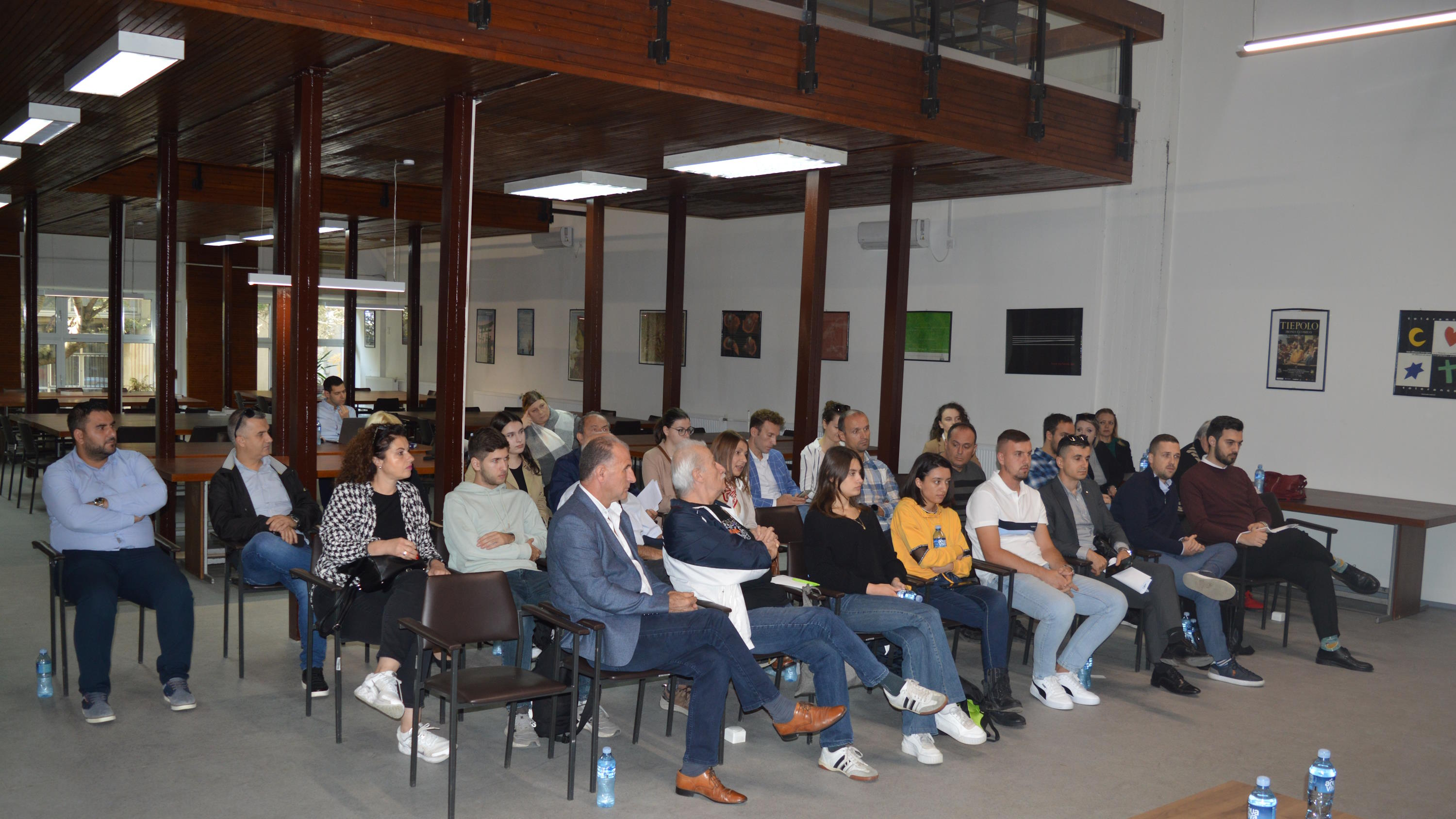
North Macedonia should make efforts to complete the reforms in the country so that it can become a member of the EU.. This was the conclusion of the policy dialogue event “New geopolitical developments and the impact on North Macedonia” which was held yesterday in Skopje with the citizens of the Skopje region. Citizens, however, […]
Quarterly brief: Rule of Law in View of EU Accession – July-September 2023
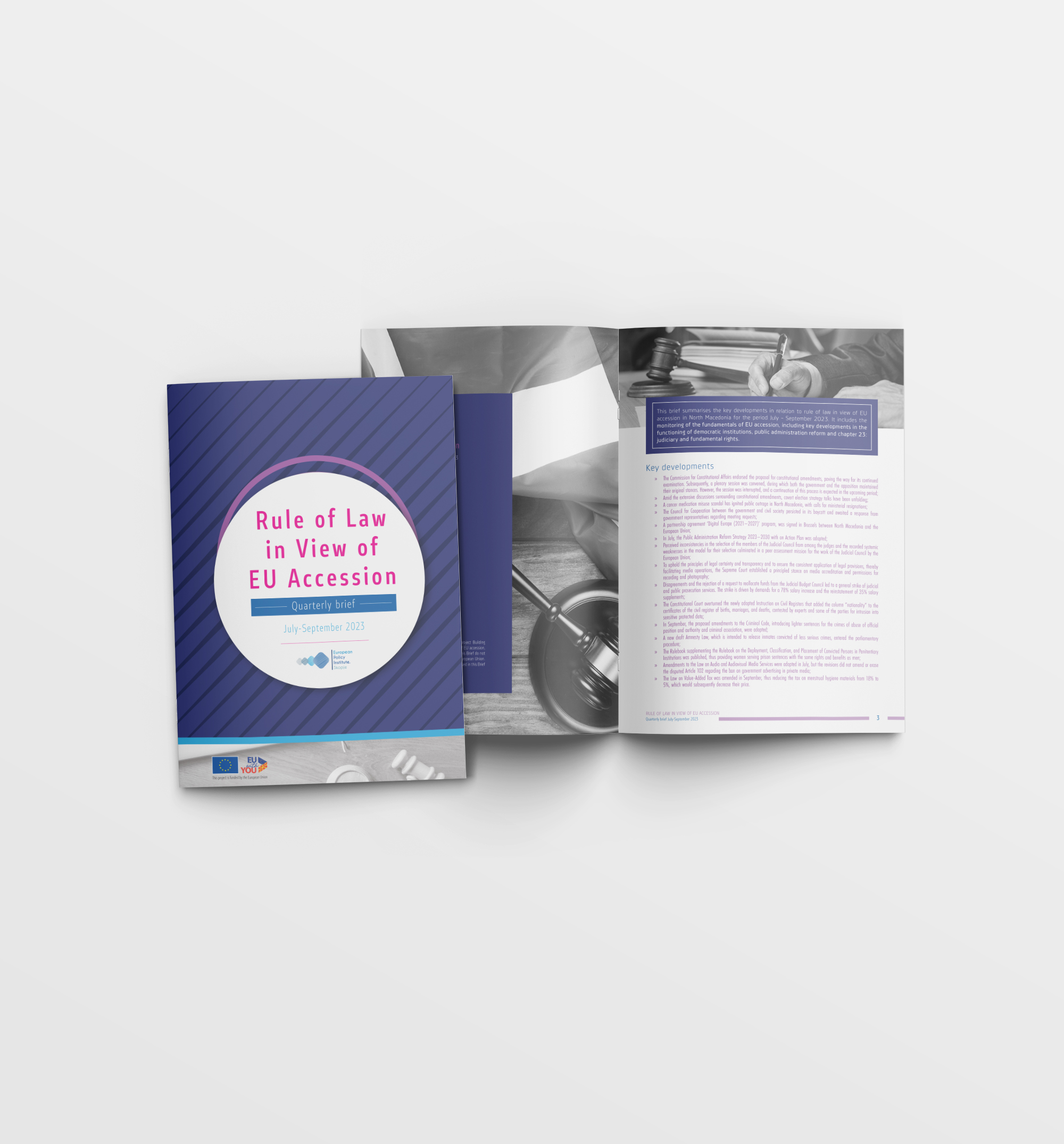 This brief summarises the key developments in relation to rule of law in view of EU accession in North Macedonia for the period July – September 2023. It includes the monitoring of the fundamentals of EU accession, including key developments in the functioning of democratic institutions, public administration reform and chapter 23: judiciary and fundamental [...]
CSF 2023: Key Recommendations of the Thematic Working Group on Access to European Single Market
 This paper is based on inputs from three regional online consultation events and one hybrid public event of the Thematic Working Group “Access to European Single Market” organised between June and September 2023. The thematic working group led by the European Policy Institute, Skopje gathered more than 65 experts from civil society, academia, private sector, [...]
Submission for the Universal Periodic Review of the Republic of North Macedonia (4th cycle)
 This document brings together the findings, conclusions and recommendations that emerged from the monitoring, analysis, interviews and reporting carried out by the European Policy Institute (EPI) – Skopje and the other submitting organisations. DOWNLOAD PDF
[Open call] Local PAR Citizen Engagement Small Grant Facility
 Western Balkan Enablers for Reforming Public Administrations – WeBER 3.0 project is a three-and-a-half-year-long regional project, worth 1.444.451 EUR, funded by the European Union, represented by the European Commission, and co-funded by the Austrian Development Agency. The project implementation period is February 2023 – July 2026. A total sum of 280,000 EUR is allocated for the SGF, to [...]
Deeper economic integration of the Western Balkans to the European Union – when, how and how much?

As part of hosting the Thematic Focus Group (TWG) Access to Single Market as one of the seven TWGs of the Berlin Process CSF in Tirana, EPI organized a discussion titled “Deeper economic integration of the Western Balkans to the European Union – when, how and how much?” where we presented and discussed the draft […]
The findings of the Report on fundamental rights of FRA prepared by EPI presented in the Parliament
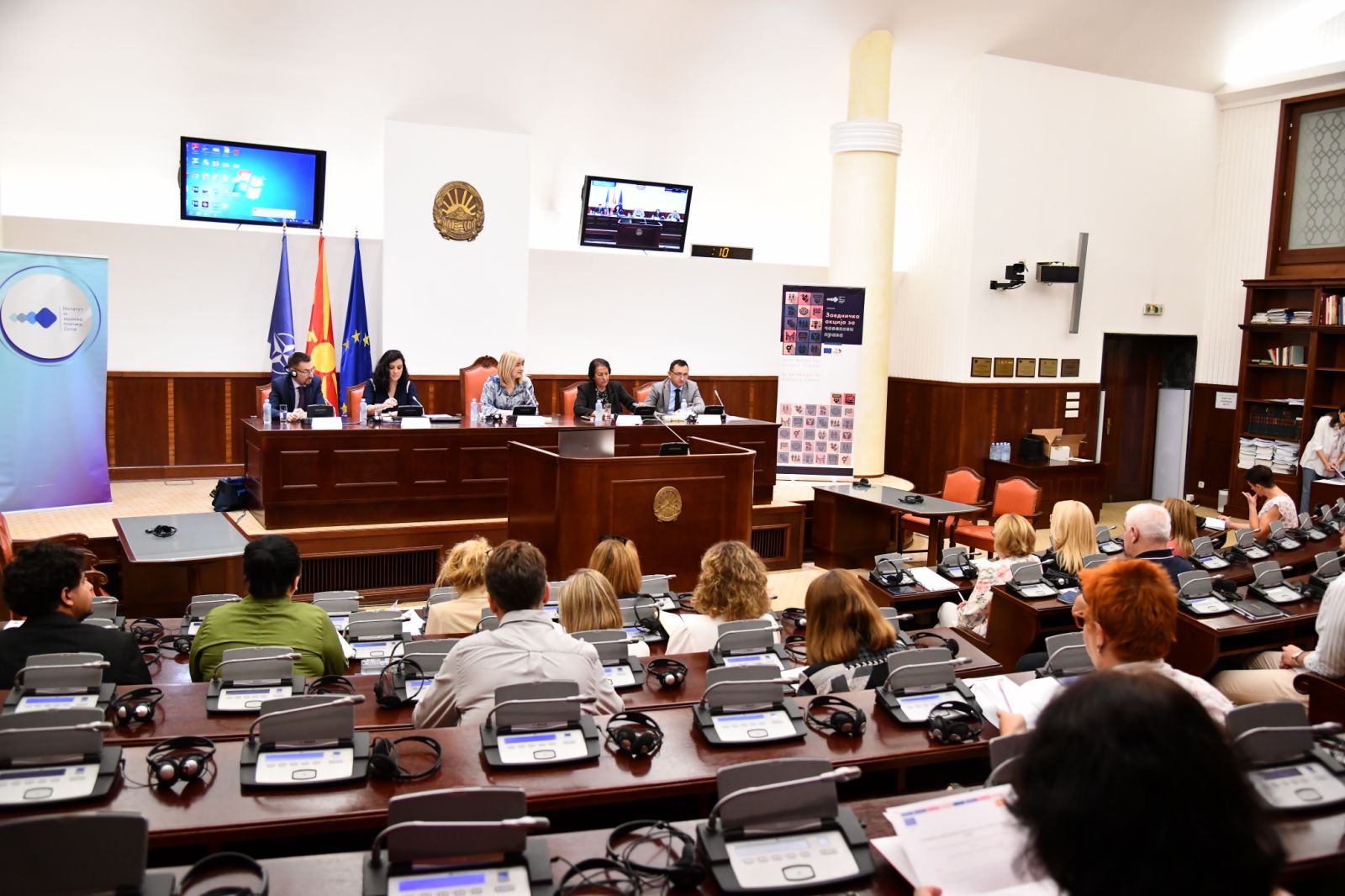
The findings of the annual report on fundamental rights of the European Union Agency for Fundamental Rights (FRA) were presented and discussed at a public debate in the Assembly of the Republic of North Macedonia on Friday. This report is produced for the fourth year in a row by the Institute for European Politics, as a […]
FRA: Ensuring access to public services for older people in digital societies
 Europe’s ageing population is ever-increasing, and our societies are becoming more digitalised. Many public services are available online, with many more services being digitalised. But EU data show that only 1 in 4 people in the EU aged 65 to 74 have at least basic digital skills. So, older people may be deprived of their [...]
Institutional set-up and external consultations for the preparation of the Economic Reform Programmes in the Western Balkans
 All candidates and potential candidates for European Union (EU) membership prepare, adopt and implement Economic Reform Programmes (ERPs). The ERP exercise prepare the enlargement countries for their future participation in the EU’s economic policy coordination procedures, the European Semester. The ERPs have an important role in economic policy planning and steering reforms to sustain macroeconomic [...]
Quarterly brief: Rule of Law in View of EU Accession – April-June 2023
 This brief summarises the key developments about the rule of law in view of EU accession in North Macedonia from April to June 2023. It includes monitoring the fundamentals of EU accession, including key developments in the functioning of democratic institutions, public administration reform and chapter 23: judiciary and fundamental rights. DOWNLOAD PDF