
Reform Agenda Snapshot (Јune ‘25) – North Macedonia

This infographic provides an overview of North Macedonia’s Reform Agenda implementation up to June 2025, highlighting progress made, pending measures, and key challenges across priority areas. Check out the infographics for the other Western Balkan countries on the Reform Monitor website.
[Summary of the project] Fostering public participation in constructive political dialogue

The project “Fostering public participation in constructive political dialogue” aims to strengthen informed public debate in North Macedonia by engaging citizens and Members of Parliament (MPs) in inclusive, deliberative dialogues on political polarization. Building on previous deliberative polling initiatives with Stanford University, the project promotes citizen participation in shaping democratic reform.
Western Balkans Human Rights Cities Initiative: The importance of a Human Rights Based Approach in local government

This survey on the human rights situation in Albania and North Macedonia is part of a broader effort to strengthen democratic governance, civic participation, and human rights mainstreaming in the Western Balkans. Both countries, as EU candidate states, are navigating complex processes of decentralisation and multi-level governance while aspiring to align their institutions with European […]
Brief analysis of the amendments to the laws on primary and secondary education and their compliance with the EU directives on non-discrimination
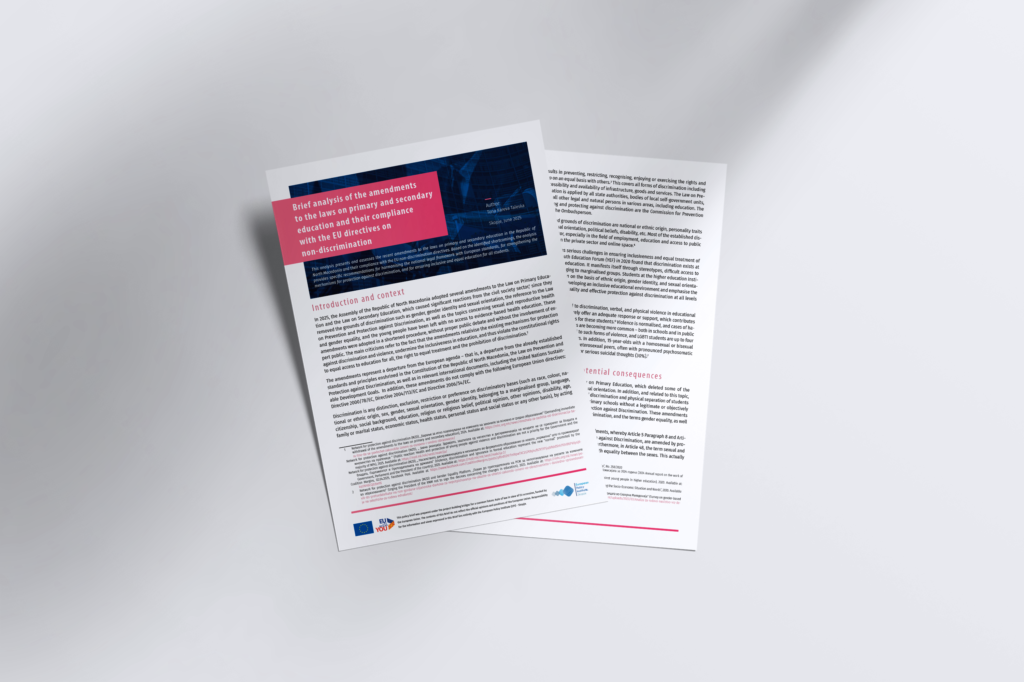
This analysis presents and assesses the recent amendments to the laws on primary and secondary education in the Republic of North Macedonia and their compliance with the EU non-discrimination directives. Based on the identified shortcomings, the analysis provides specific recommendations for harmonising the national legal framework with European standards, for strengthening the mechanisms for protection […]
[Infosheet] Strengthening Equality Bodies in North Macedonia

This infosheet displays the key findings of the policy brief examining the alignment of North Macedonia’s equality body—the Commission for Prevention and Protection against Discrimination (CPPD)—with EU Directives 2024/1499 and 2024/1500, which set new minimum standards for equality bodies across the EU. It also shows the key challenges faced by the CPPD and what should […]
The National PAR Monitor for North Macedonia: Strategy for PAR

The assessment of transparency and inclusiveness of the PAR agenda in this report focuses on two critical issues – 1) participatory development of PAR planning documents, that includes non-state actors, and 2) involvement of CSO in the work of the governmental PAR coordination and monitoring mechanisms. For the former, the assessment briefly emphasises basic regulatory […]
The Western Balkan PAR Monitor: Strategy for PAR

The assessment of transparency and inclusiveness of the PAR agenda in this report focuses on two critical issues: 1) participatory development of PAR planning documents, which includes non-state actors, and 2) involvement of CSO in the work of the governmental PAR coordination and monitoring mechanisms. For the former, the assessment briefly emphasises basic regulatory requirements […]
Business and Human Rights in the EU: Assessing the New Corporate Sustainability Due Diligence Directive (CSDDD)
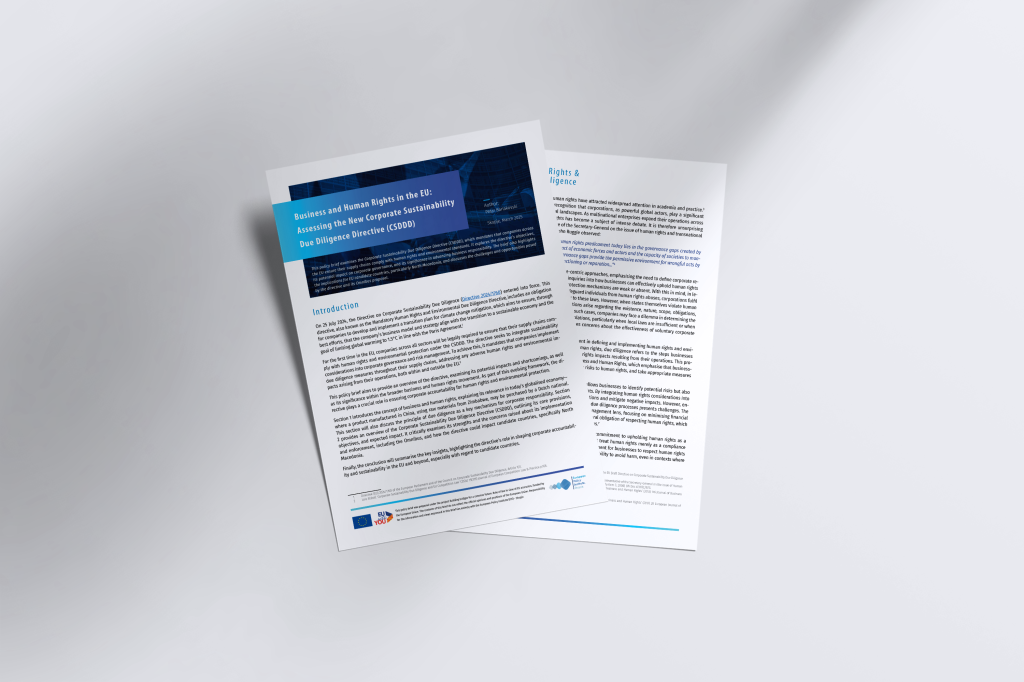
This policy brief examines the Corporate Sustainability Due Diligence Directive (CSDDD), which mandates that companies across the EU ensure their supply chains comply with human rights and environmental standards. It explores the directive’s objectives, its potential impact on corporate governance, and its significance in advancing business responsibility. The brief also highlights the implications for EU […]
Analysis for market integration initiatives between the Western Balkans and the European Union, beyond the Growth Plan for the Western Balkans

The report identifies opportunities for deeper integration, including expanding CRM initiatives, leveraging regional investment frameworks, advancing digital and green transitions, and fostering labour mobility through targeted reforms. It also emphasizes the need for stronger governance and institutional capacity to address disparities and ensure alignment with EU accession priorities. By utilizing collaboration among national, regional, and […]
[Infographic] Reform & Growth Facility

Infographic about the Reform and Growth Facility.