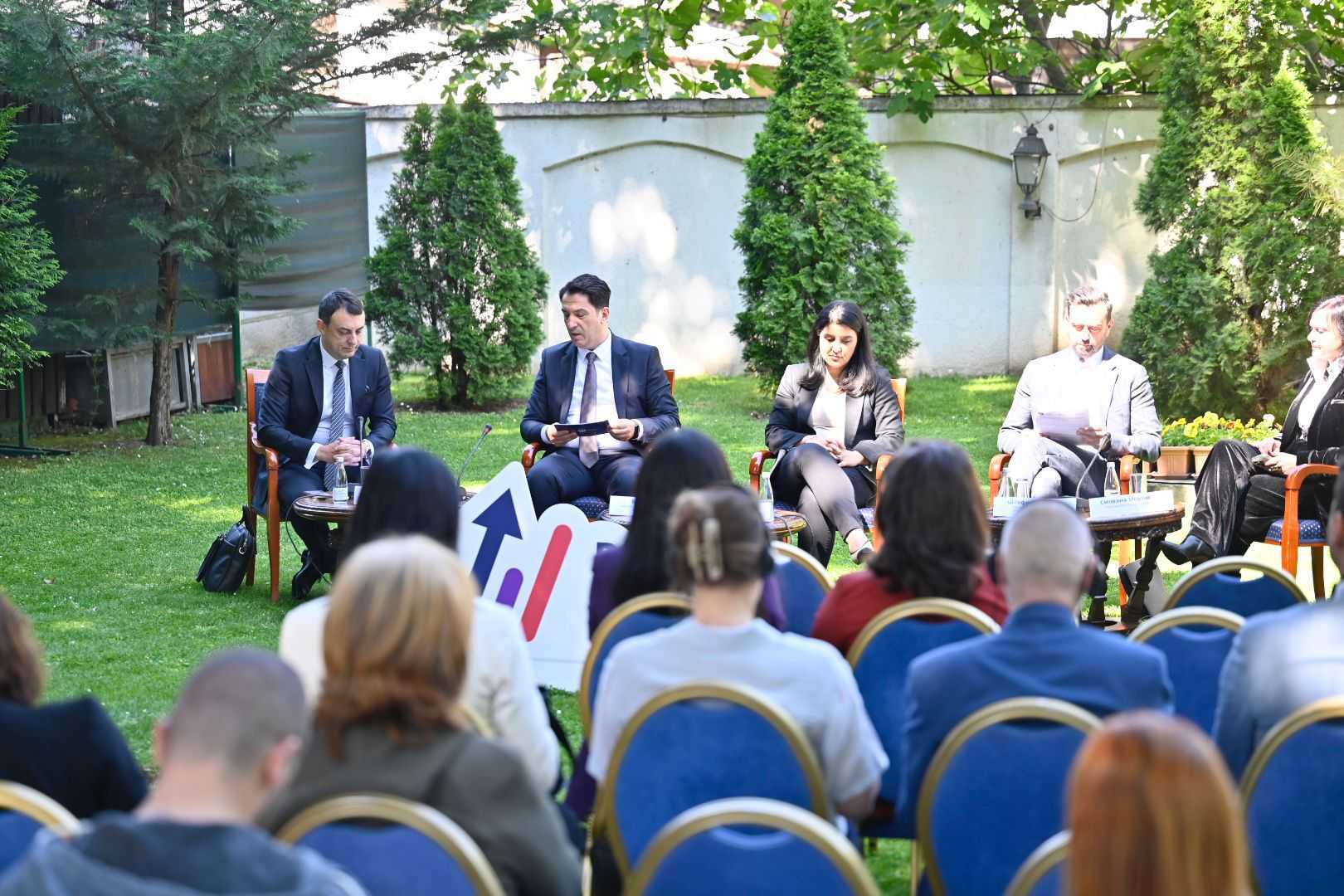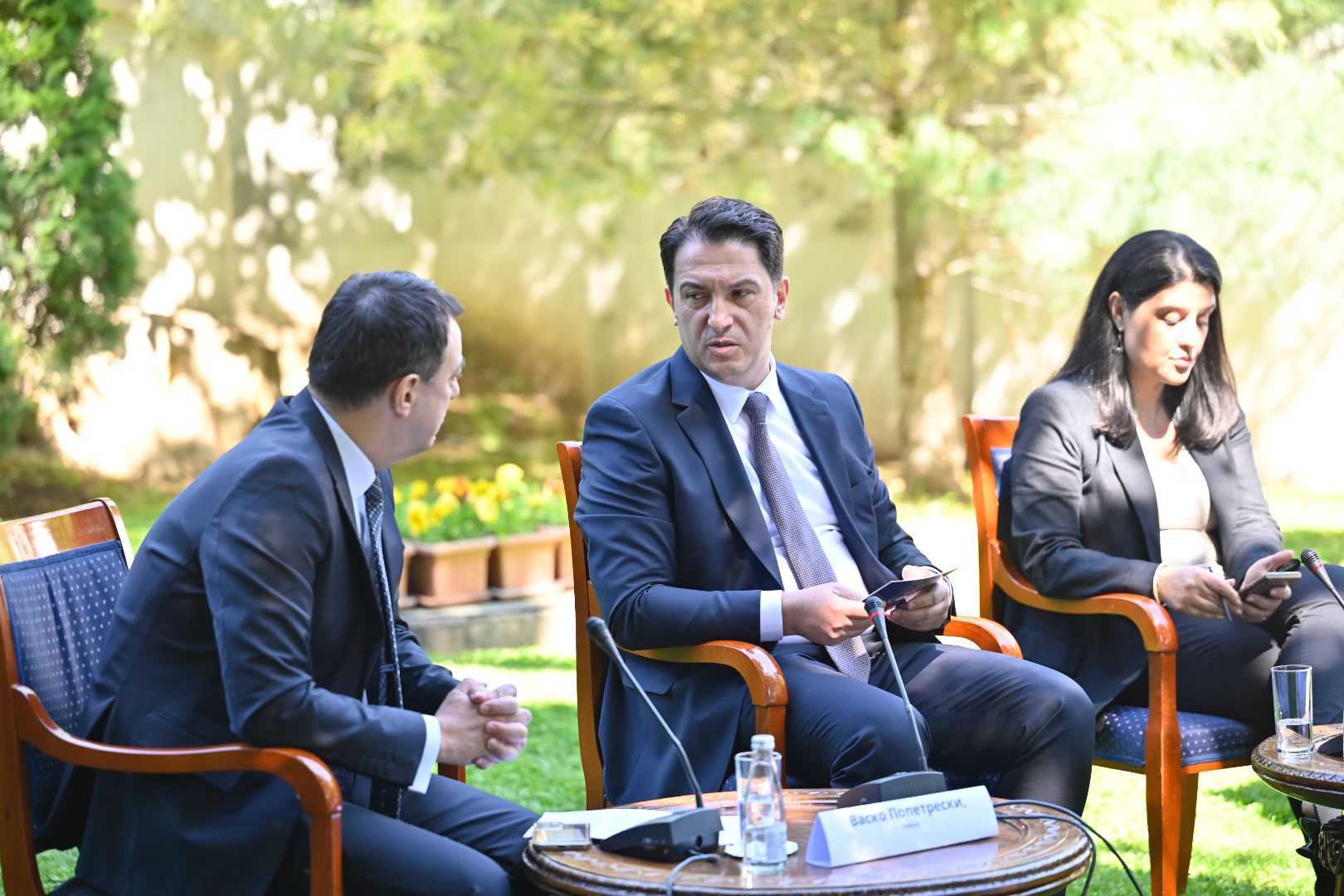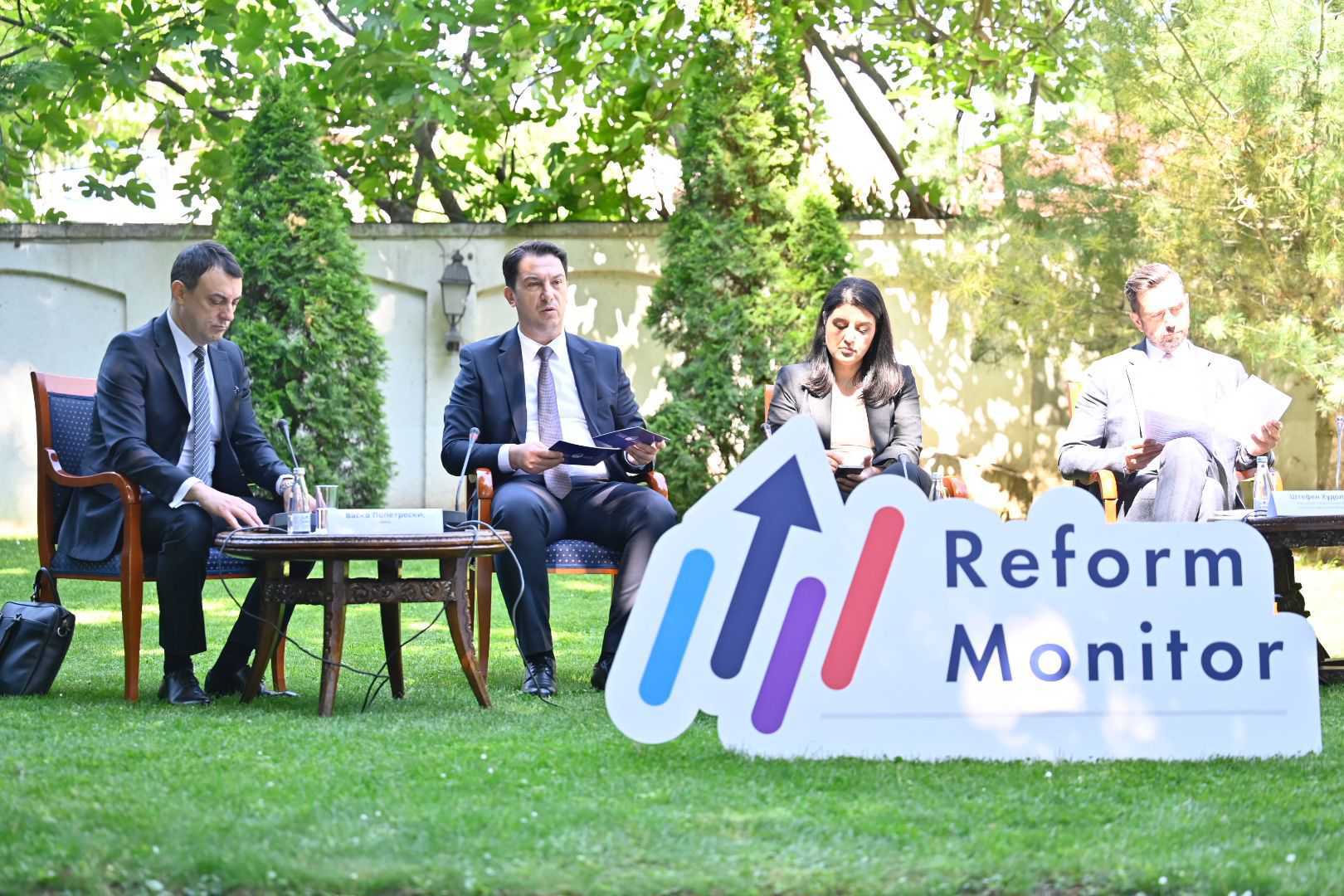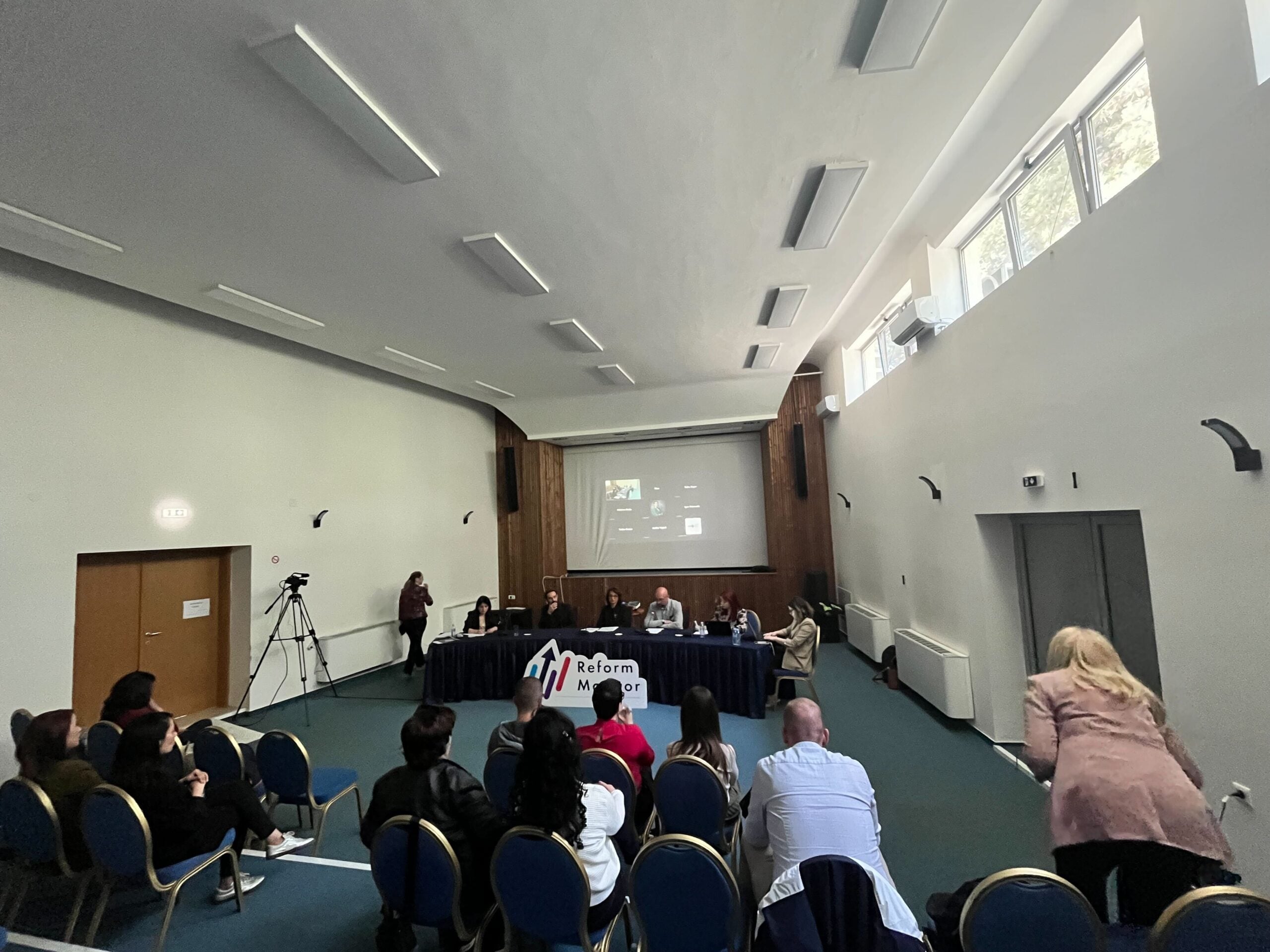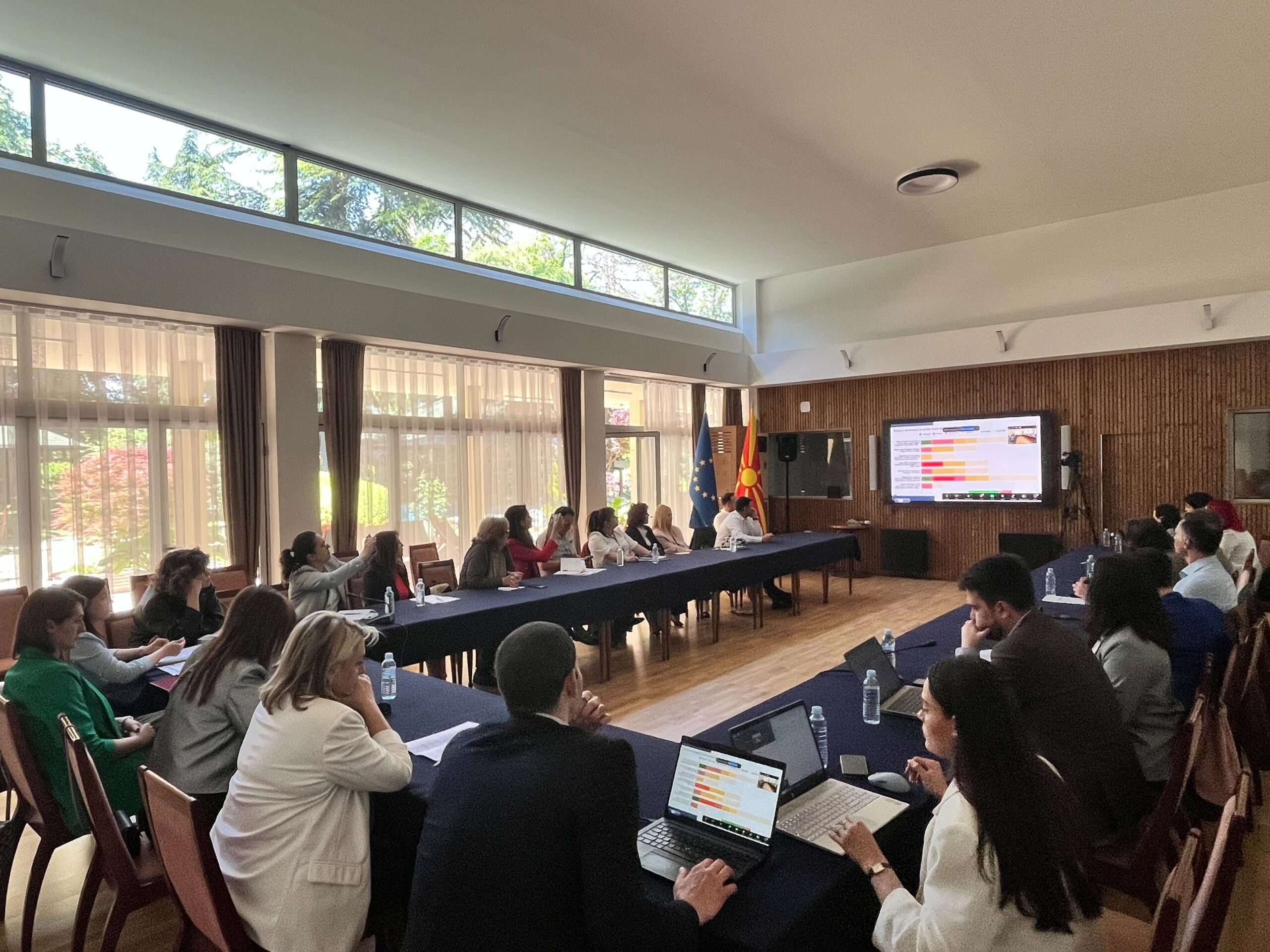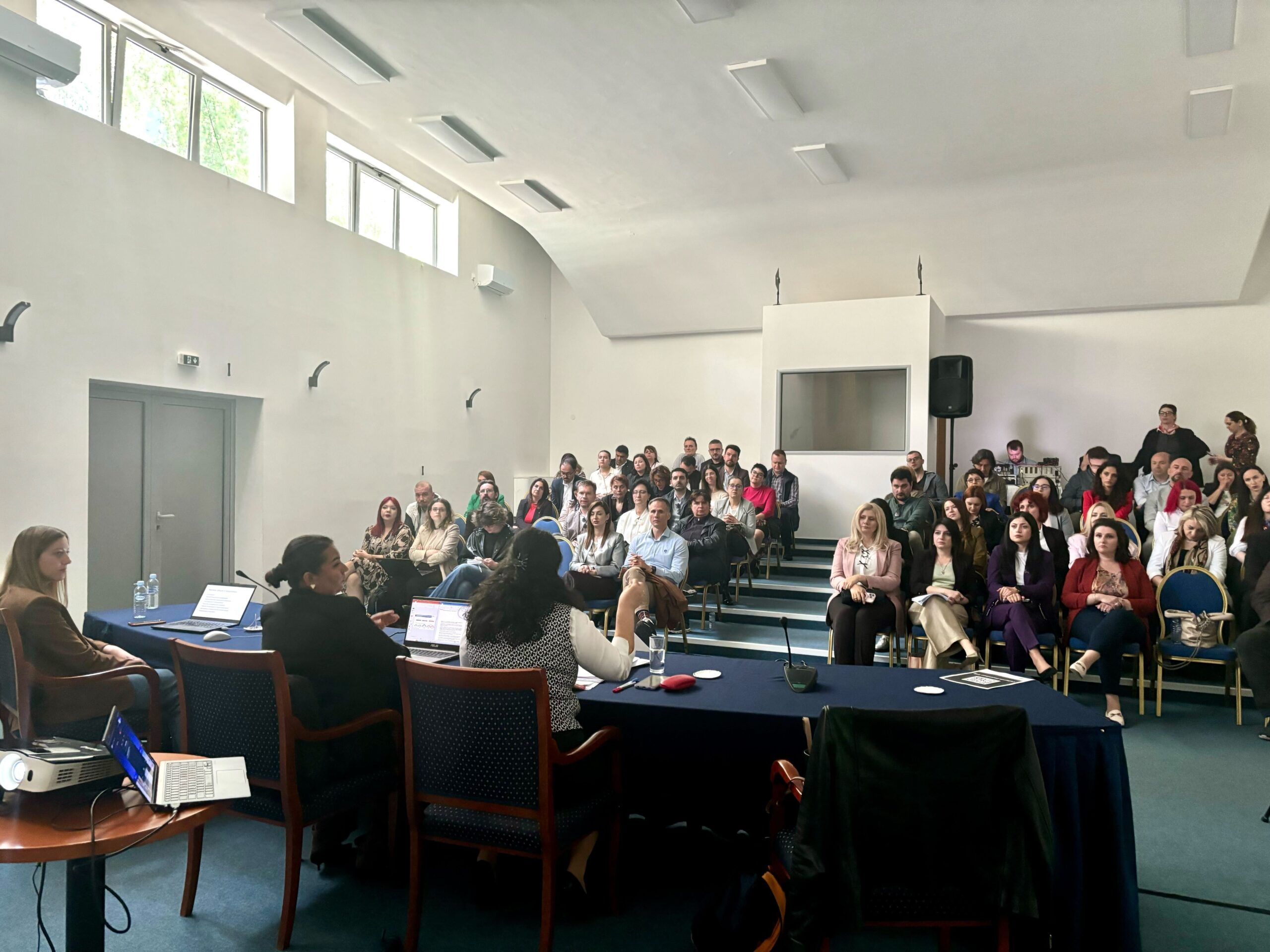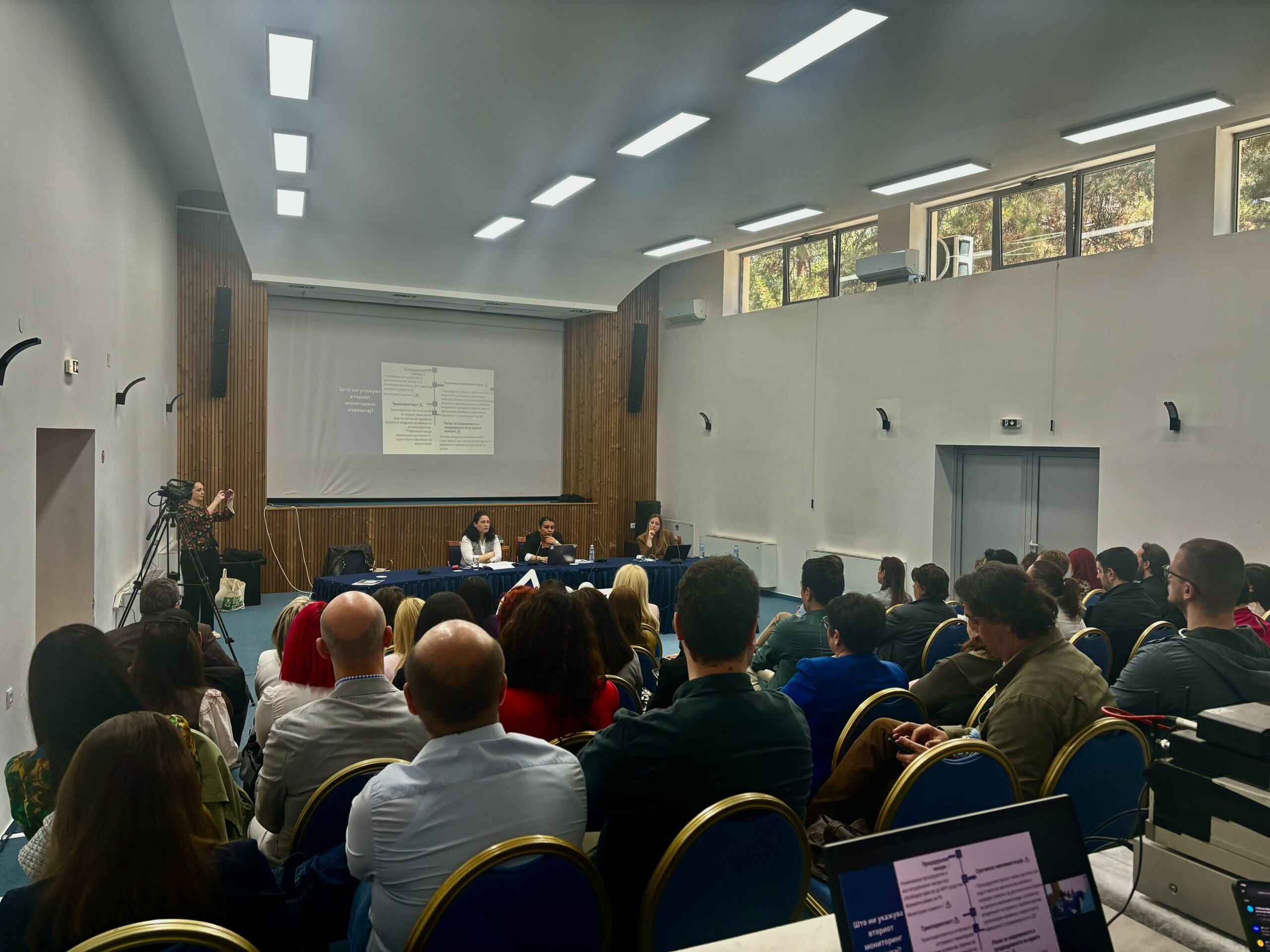
The European Policy Institute (EPI) – Skopje and the Ministry of European Affairs (MEA) held the third meeting of the National Consultative Mechanism for the Reform Agenda (NCM-RA) at the Members of Parliament Club. The meeting, titled “Reform Agenda 2024-2027 at the Mid-Way Point: Overview of Progress to Date,” served as a critical point for evaluating reform steps and enhancing coordination between state institutions and civil society.
The NCM-RA is a multi-sectoral mechanism established as a national platform for structured, transparent, and inclusive dialogue. It unites over 150 civil society organizations, academic representatives, and chambers of commerce. Its goal is to enable evidence-based monitoring of North Macedonia’s Reform Agenda—a central part of the European Union’s Reform and Growth Facility for the Western Balkans.
The event opened with remarks by Bekim Sali, Minister of European Affairs; Steffen Hudolin, Head of Cooperation at the EU Delegation to North Macedonia; Silvana Mojsovska, Professor at the Institute of Economics; and Simonida Kacarska, Director of EPI.
EPI’s monitoring indicates that the implementation of the Reform Agenda is uneven, with key reform areas facing implementation challenges. According to the EC’s last assessment in October, out of 21 reform steps with initial deadlines through December 2024 and June 2025, 6 have been fulfilled. To date, 50 reform steps have reached their deadlines (including 15 currently in a grace period) and another 29 are due by December 2025, for which the European Commission’s assessment is pending.
Progress is most visible in reforms involving legislation, particularly in the digital transition. However, reforms in the rule of law, judiciary, anti-corruption, organized crime, energy efficiency, and the business environment still require stronger institutional coordination and greater operational readiness. To successfully meet reforms in grace periods and reduce risks for future payments, stronger coordination and the substantive inclusion of civil society via the Monitoring Committee are essential.
Minister Bekim Sali emphasized that European integration for North Macedonia represents a concrete transformation based on measurable reforms. He noted that the country was the first in the region to finalize its Reform Agenda and meet pre-financing conditions, demonstrating strong institutional capacity. Sali stressed that the focus must now shift to the actual effect of reforms on public services and daily life, rather than just adopted documents.
Steffen Hudolin (EU Delegation) welcomed the continuity of the mechanism at this “mid-way” point. He underlined that the Reform Agenda is not just a financing mechanism but a structural path toward EU membership. While noting an encouraging upward trend, Hudolin warned that delays now come with a cost and could lead to the loss of funds, especially for the 10 steps approaching the end of their grace period on June 30, 2026. He called on civil society to move beyond being “observers” and act as active contributors.
Following the public session, the meeting continued with three parallel working groups:
-
Energy Transition and Digital Transformation (Decarbonization and EU digital market alignment).
-
Private Sector Development and Business Environment (Economic potential and human capital).
-
Fundamental Values / Rule of Law and Good Governance (Judiciary reforms and anti-corruption).
This activity is part of the regional project “Western Balkans Reform and Growth Monitor,” implemented by EPI in partnership with the Think for Europe Network (TEN) and Transparency International Bosnia and Herzegovina. The project is funded by the European Union and co-funded by the Open Society Foundations-Western Balkans.